AI-Accelerated
Cyber Risk Readiness






First-attempt exploit success rate demonstrated during AI-assisted vulnerability research.
Vulnerabilities addressed in a recent Microsoft Patch Tuesday.
Average cost of a Canadian data breach.


Three Foundations of Cyber Risk Readiness
Every organization's environment is different, but the same three capabilities consistently determine how prepared it is to respond to cyber threats.

Operational Readiness
Can your team keep up?
Security teams are managing more assets, more vulnerabilities, and greater operational complexity than ever before.
Operational readiness focuses on the people, processes, and governance that allow organizations to identify risk, prioritize remediation, and respond consistently as threats evolve.
What good looks like:
-
Complete asset visibility
-
Effective vulnerability and patch management
-
Clear governance
-
Operational capacity to sustain security over time

Modern Security Architecture
Can your environment contain an attack?
Most enterprise environments have evolved over years of cloud adoption, acquisitions, and modernization. That growth often creates unnecessary complexity and expands the organization's attack surface.
A modern security architecture strengthens identity, improves visibility, reduces unnecessary access, and limits the impact of a security incident if one occurs.
What good looks like:
-
Strong identity controls
-
Network segmentation
-
Zero Trust principles
-
Continuous visibility across hybrid environments

Resilience + Recovery
Could your business recover tomorrow?
Recovery planning has become just as important as prevention.
Organizations need confidence that critical systems, applications, and data can be restored quickly after a cyber incident.
What good looks like:
-
Tested recovery plans
-
Clearly defined recovery objectives
-
Reliable backup strategies
-
Regular recovery validation
Operational Readiness
Can your team keep up?
Security teams are managing more assets, more vulnerabilities, and greater operational complexity than ever before.
Operational readiness focuses on the people, processes, and governance that allow organizations to identify risk, prioritize remediation, and respond consistently as threats evolve.
What good looks like:
-
Complete asset visibility
-
Effective vulnerability and patch management
-
Clear governance
-
Operational capacity to sustain security over time
Modern Security Architecture
Can your environment contain an attack?
Most enterprise environments have evolved over years of cloud adoption, acquisitions, and modernization. That growth often creates unnecessary complexity and expands the organization's attack surface.
A modern security architecture strengthens identity, improves visibility, reduces unnecessary access, and limits the impact of a security incident if one occurs.
What good looks like:
-
Strong identity controls
-
Network segmentation
-
Zero Trust principles
-
Continuous visibility across hybrid environments
Resilience + Recovery
Could your business recover tomorrow?
Recovery planning has become just as important as prevention.
Organizations need confidence that critical systems, applications, and data can be restored quickly after a cyber incident.
What good looks like:
-
Tested recovery plans
-
Clearly defined recovery objectives
-
Reliable backup strategies
-
Regular recovery validation
THE COMPUGEN PROCESS
What to Expect from a Cyber Risk Readiness Working Session
Understanding your current cyber risk posture is the first step toward improving it.


Step 1: Discover
Understand your business priorities, technology environment, and operational challenges.
Step 2: Assess
Evaluate operational readiness, security architecture, and resilience.
Step 3: Prioritize
Identify, prioritize and recommend the improvements that will have the greatest impact on reducing business risk.
Step 4: Move Forward
Leave with a clearer understanding of your cyber risk posture and the next steps for strengthening it.

Step 1: Discover
Understand your business priorities, technology environment, and operational challenges.
Step 2: Assess
Evaluate operational readiness, security architecture, and resilience.
Step 3: Prioritize
Identify, prioritize and recommend the improvements that will have the greatest impact on reducing business risk.
Step 4: Move Forward
Leave with a clearer understanding of your cyber risk posture and the next steps for strengthening it.
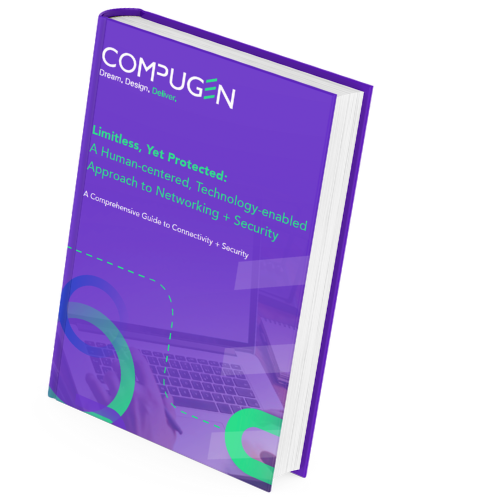
Limitless Yet Protected: A Human-centered, Technology-enabled Approach to Networking + Security
Not only is there more demand for data-intensive applications, such as video, but there are also fewer hardware devices to support them. This guide explores best practices for reconciling these often-competing forces.










.png)